


Bottega Veneta Bag Authentication: Intrecciato Checklist
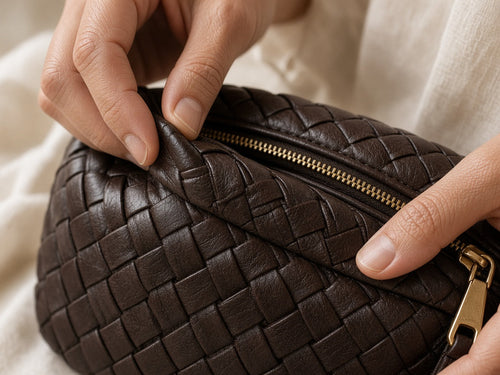
Authenticating a Bottega Veneta bag starts with the intrecciato weave, leather hand-feel, hardware finish, and construction symmetry — not with a single logo photo. This guide is a buyer-first checklist for reading listing photos and knowing when to walk away or escalate to a third-party authenticator.
Use it to reduce risk before you buy. For high-value purchases, pair this checklist with a reputable third-party authenticator — a blog guide is not a certificate.
Inventory note: Bolsino does not currently have a live Bottega Veneta collection. Keep the checks below when you shop Bottega elsewhere, then compare live quiet-leather peer offers here when you want a similar understated day-bag job from brands we can show today.
Quick answer: how to check a Bottega Veneta bag
- Demand sharp close-ups of the intrecciato weave, interior stamp/tag, zipper hardware, strap joins, and base corners — stock-only photos are a warning.
- Judge the weave for even tension, clean edges, and consistent strip width; sloppy or glue-heavy weaving is a common fake tell.
- Check hardware engraving, zipper smoothness, and plating evenness against nearby real examples of the same model family.
- Confirm model silhouette (Pouch, Cassette, Jodie, Cabat, Knot, and so on) matches the title and proportions in photos.
- If photos are vague, the price is “too good,” or the seller refuses extras — walk away or require third-party authentication first.
Why Bottega authentication is different
Bottega Veneta’s quiet branding means fakes often try to copy the weave and soft structure rather than a giant logo. That makes photo quality and construction reading more important than hunting for a flashy mark. Intrecciato should look intentional and even; hardware should feel purposeful; leather should not read as cardboard or heavily glued craft foam.
Many Bottega styles are soft or slouchy by design (especially Pouch-family shapes). Softness alone is not proof of authenticity — and stiffness alone is not proof of a fake. Compare the specific model you are buying.
10-point Bottega Veneta buyer checklist
- Seller & return path — Prefer sellers with clear returns, identifiable business details, and stated authentication policies. Social-only sellers with no recourse raise risk.
- Photo set — Ask for weave close-ups (front, side, base), interior stamp/label, zipper pulls, strap anchors, corners, and any dust bag / card if claimed. Blurry or cropped details are a stop sign.
- Intrecciato weave — Strips should look evenly tensioned with clean intersections. Gaps, twisted strips, glue bleed, or uneven widths are classic counterfeit tells.
- Leather quality — Real leather should look dense and aged naturally at edges over time. Plastic shine, peeling coating, or strong chemical odor raise risk (smell alone is not proof).
- Hardware — Zippers, clasps, and feet should operate smoothly with consistent plating. Soft, rough, or poorly engraved metal is a common miss on fakes.
- Branding placement — Bottega branding is often discreet. Crooked stamps, fuzzy embossing, or oddly loud logos that do not match the model family’s usual placement deserve scrutiny.
- Stitching & edges — Seams and edge paint should look even. Loose threads, skipped stitches, and thick glue lines are walk-away signals when stacked with other issues.
- Silhouette & proportions — Handle length, flap size, knot scale, cassette grid, or pouch volume should match known proportions for that model — not a “close enough” cousin.
- Provenance story — “Gifted / no receipt” can be true, but it raises the bar for photos and third-party checks.
- Price vs market reality — A deep discount on a new-looking icon style is a reason to verify harder, not celebrate faster.
Intrecciato: what to look for in photos
- Strip consistency — similar width and thickness across the panel.
- Intersection cleanliness — woven crosses should look tight, not mashed or floating.
- Edge finishing — where weave meets trim or base, the transition should look deliberate.
- Wear pattern — on pre-owned, light corner rub can be normal; peeling “leather paper” or crumbling weave edges are not.
If the seller will not provide a true macro of the weave, treat the listing as incomplete.
Hardware, stamps, and packaging (support signals)
Hardware and packaging support authenticity — they do not replace weave and construction checks.
- Zippers & pulls — smooth travel; engraving should look crisp, not shallow laser-smudge.
- Interior marks — stamps/labels should be legible and aligned with the leather quality around them.
- Dust bag / cards — helpful when present and consistent; absence alone is not a fake verdict, especially on older pre-owned pieces.
- Serial-style codes — when present, photograph them clearly; codes alone never prove a bag is real.
Model notes that change what you inspect
| Model family | Prioritize in photos | Common listing trap |
|---|---|---|
| Pouch / soft clutch-shoulder | Leather hand-feel, opening finish, strap attachment if present | Generic “slouchy pouch” listed as Bottega without weave or stamp close-ups |
| Cassette | Padded weave grid, flap alignment, strap hardware | Wrong grid proportions or soft floppy “cassette” copies |
| Jodie | Knot scale, handle weave continuity, overall balance | Knot that looks glued-on or unevenly woven |
| Cabat / woven tote | Handle joins, base structure, weave tension across large panels | Sagging panels with irregular strip widths |
| Knot clutch | Knot closure construction, frame/edge quality | Decorative knot that does not match metal/leather finishing quality |
Always authenticate the exact model in the title. A perfect Cassette photo set does not help a Jodie listing.
Red flags that should stop the deal
- Seller refuses additional weave, stamp, or hardware photos
- Only stock images or watermarked catalog shots
- Obvious glue, crooked stamps, or chaotic weaving
- Price far below recent comparable listings for the same model and condition
- Pressure tactics (“other buyer waiting”) paired with weak photos
- Claims that a dust bag alone “proves” authenticity
Limits of DIY authentication
Photo checklists catch many mismatches. They cannot guarantee a bag is real. High-end fakes exist; lighting hides defects; and some authentic pre-owned bags look imperfect from wear. When the spend is large, or your gut is unsure after the checklist, use a reputable third-party authenticator before you pay — or buy only where returns and authentication policies are explicit.
How to buy with less risk
- Shortlist the model and size first.
- Run this checklist on every candidate listing.
- Prefer clear return / authentication policies.
- Escalate high-value deals to third-party auth.
- Only then compare live offers for the bags you can actually buy today.
For channel risk and seller hygiene, use how to buy pre-owned safely and new vs pre-owned.
After your checks: quiet-leather peers with live offers
Until a Bottega Veneta collection is live on Bolsino, these brands cover overlapping “quiet leather / understated day bag” shopping — useful when your Bottega shortlist stalled on weak photos or missing stock. Compare current cards; return to Bottega when inventory exists.
FAQ: Bottega Veneta authentication
How can I tell if a Bottega Veneta bag is real?
Start with intrecciato weave quality, leather density, hardware finish, discreet branding placement, and silhouette accuracy for the named model. Stack signals — do not rely on one logo shot.
Does the intrecciato weave prove authenticity?
A clean, even weave is a strong positive signal, but fakes attempt woven looks too. Combine weave inspection with hardware, stamps, proportions, and seller credibility.
Do Bottega Veneta bags have serial numbers?
Some pieces include interior codes or labels; formats and presence vary by era and model. A code can support a listing story — it is never enough alone.
Is missing packaging a fake?
Not automatically. Pre-owned bags often ship without original cards or dust bags. Missing extras raise the importance of weave and construction photos; they are not a standalone verdict.
Should I still use a third-party authenticator?
Yes for high-value purchases, thin photo sets, or any listing that still feels off after this checklist. A guide reduces risk; it does not replace professional review when money is serious.
Keep exploring
- Authentication hub — brand checklists in one place.
- Hermès authentication · Chanel authentication · Louis Vuitton date codes · Gucci real vs fake
- Buy pre-owned safely · Where to buy
- Handbag restoration cost — when repair quotes meet replacement decisions.
Zoom the weave, hardware, and interior marks on every serious listing. Prefer clear return paths. When a listing survives your checks, buy carefully — and compare live peer offers here when Bottega stock is not available.
See our Affiliate Marketing Disclosure.
Also in Authentication & Care
Chanel Bag Authentication: Serial Numbers & Checklist

Louis Vuitton Authentication Guide: Date Codes & Checklist
